Remote desktop for iPad Pro + Magic Keyboard
Your Mac, at 120 fps, on the iPad Pro.
Mimac turns an iPad Pro and Magic Keyboard into the best display and input device a Mac mini or Mac Studio can have. Native resolution. Real trackpad gestures. Lossless audio. No account, no relay servers, no subscription.
Free to try · $49.99 once · No subscription
Built for iPad Pro and Magic Keyboard
Nothing in the way.
No on-screen buttons, toolbars or floating controls. Every pixel is your Mac. Mimac's own controls live where iPadOS keeps them: in the menu bar.
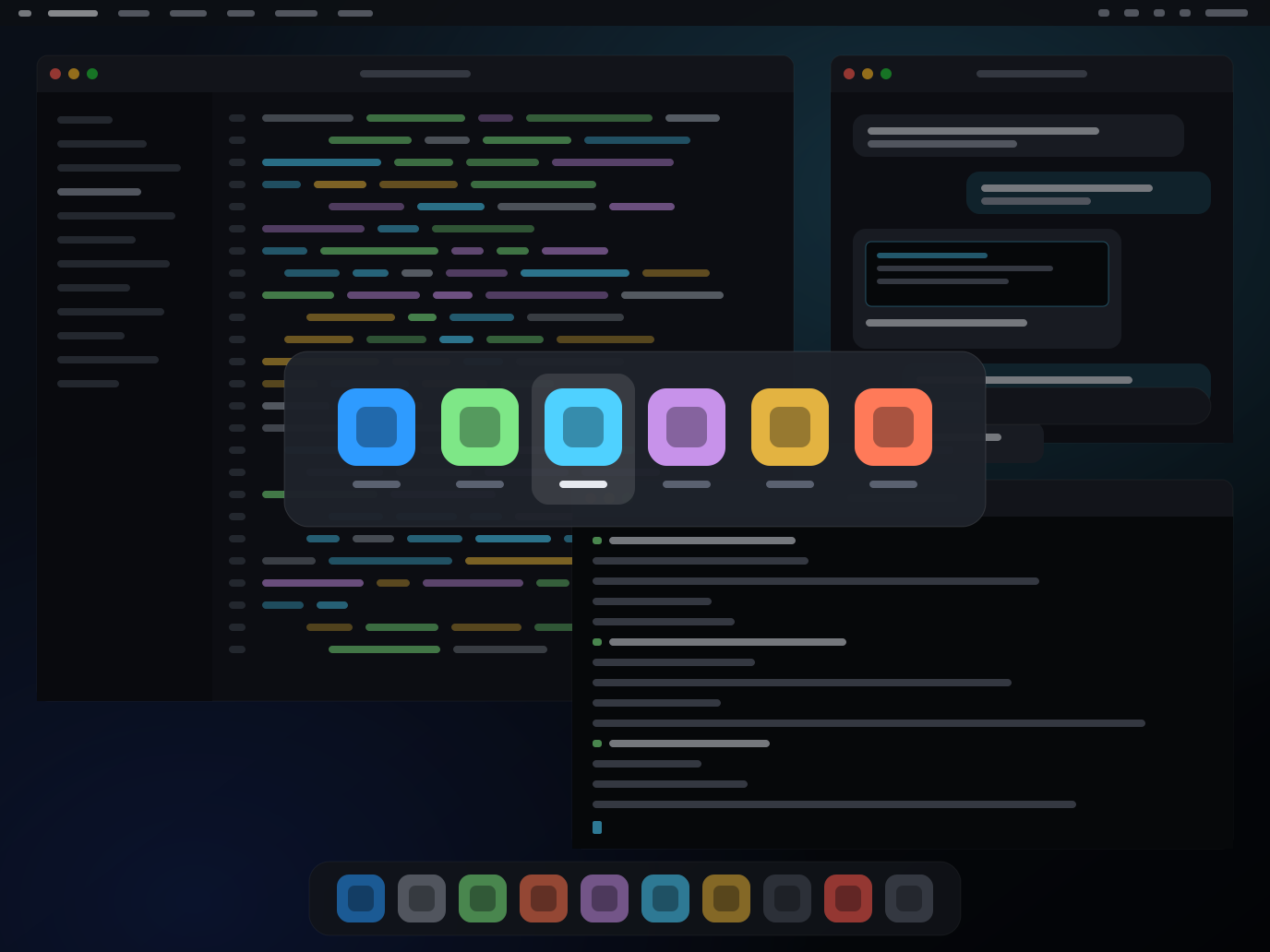
- Option+Tab is your Mac's app switcher. Rendered on the iPad with the Mac's live app list and icons, so it appears instantly. Command+Tab stays iPadOS's.
- Every keyboard shortcut reaches the Mac, including the ones iPadOS normally keeps for itself. Command+Space, Command+Q, Control+arrows: they all do what they do at your desk.
- Menus in the iPadOS menu bar. Connect, disconnect, tuning and diagnostics are one glance away and never cover your work.
Feels like a MacBook
Gestures that behave.
Two-finger scrolling with real momentum. Pinch to zoom in Figma, Photoshop and Maps, delivered to macOS as genuine magnify gestures rather than fake keystrokes. Pointer precision, click, drag, right-click.
- Scroll phases and momentum tuned against a MacBook trackpad, so flicks coast and stop the way you expect.
- Pinch is a real magnify event, so apps that zoom on a MacBook zoom here. If a macOS update ever changes that, a Control+scroll fallback is one switch away.
- A cursor that looks right. The Mac's own cursor artwork, at the right size, at 120 Hz.
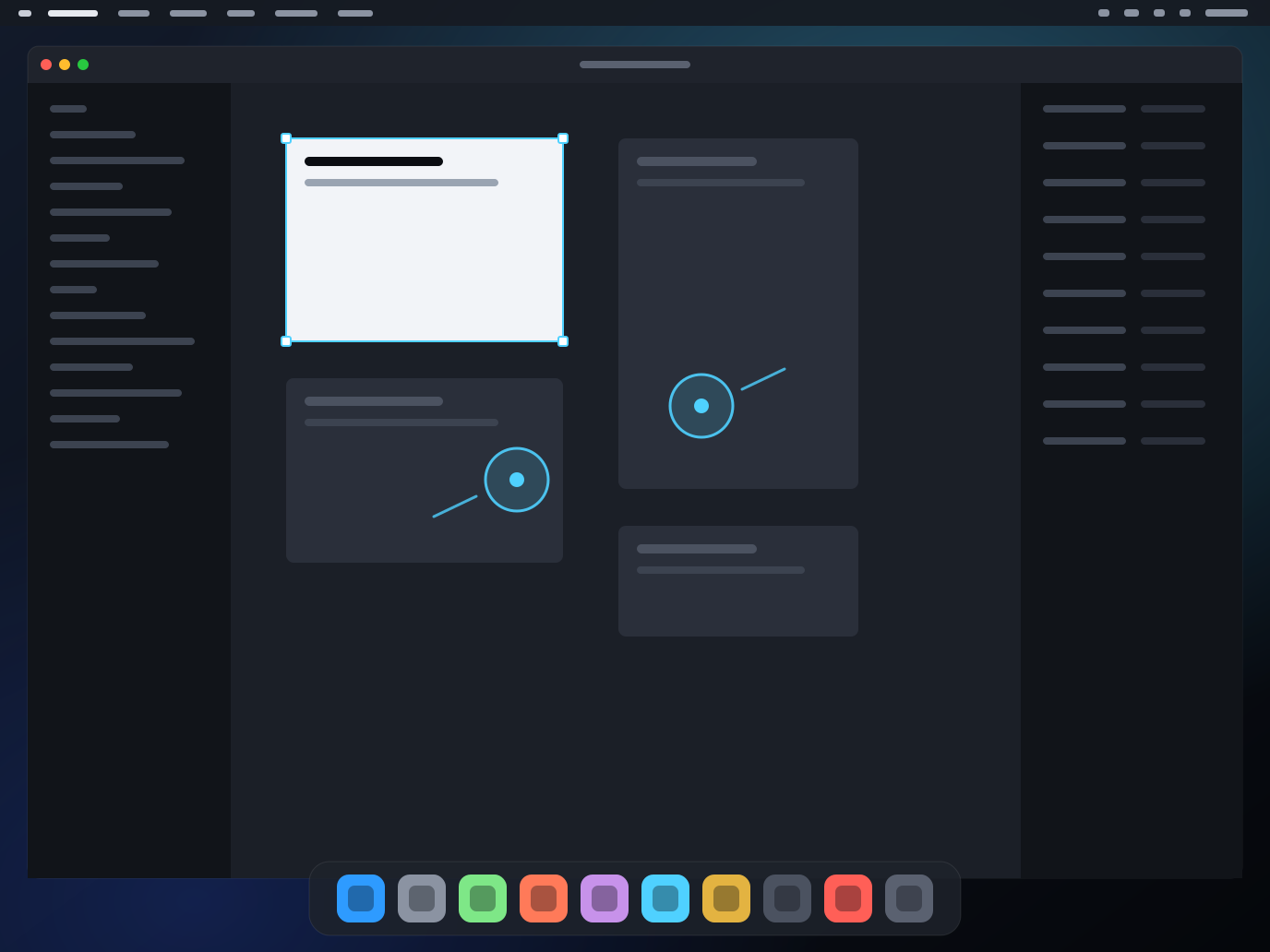
Clips are captured at 60 fps by iPadOS. Mimac runs at 120.
Pixel-perfect, 120 fps
The iPad Pro is the best display your Mac mini never had.
Mimac creates a virtual display on your Mac at your iPad's exact native resolution: 2752×2064 on the 13-inch iPad Pro, 2420×1668 on the 11-inch. Your Mac renders for your iPad, pixel for pixel. No scaling, no soft text.
120 fps, end to end
Capture, encode, decode and display are all pinned to 120. On your local network, motion on the iPad matches motion on the Mac. Over the internet it depends on your connection.
Text as sharp as the desk
Because the Mac draws at your iPad's resolution, there is no resampling step. Menus, code and type look the way they do on a Studio Display.
Thirty tuning controls
Bitrate, scroll momentum, pinch delivery, prediction and more, all adjustable in the app. The defaults are tuned for a Mac mini on Wi-Fi 6; the rest is yours.
Sound and voice
Lossless audio. Your voice on the Mac.
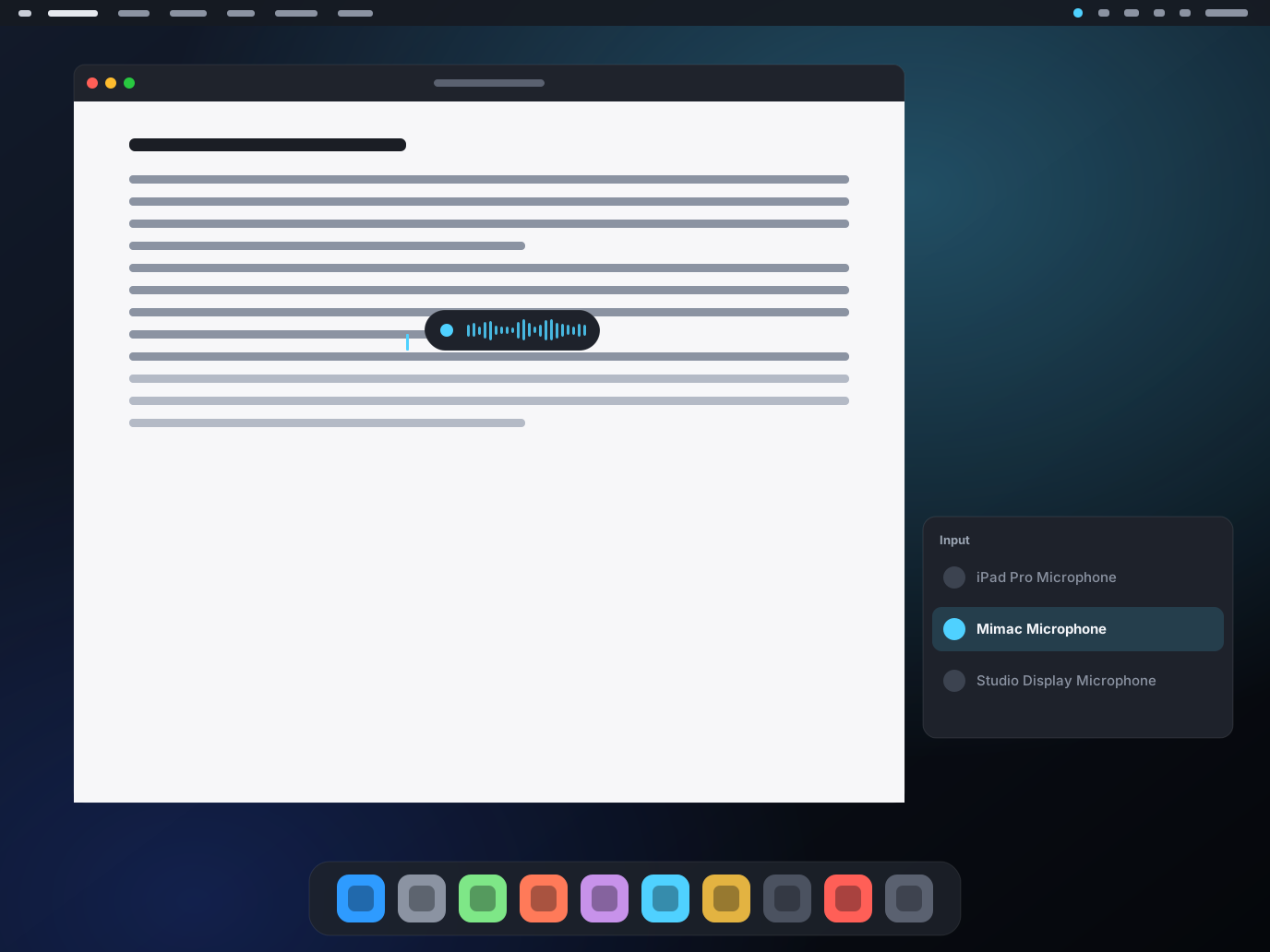
Mimac streams your Mac's audio as 48 kHz PCM, uncompressed. In the other direction, your iPad's microphone appears on the Mac as an input device called Mimac Microphone.
- Dictation apps just work. Wispr Flow, OpenWhispr and macOS dictation hear you exactly as they do at your desk, because they see a real microphone.
- The Magic Keyboard's dictation key works too. With a hardware keyboard attached, what you say arrives on the Mac as typed text.
- Optional, and honest about it. Mimac Microphone is an audio driver, installed only if you tick it in the Mac installer. Skip it and everything else still works.
Made for headless Mac minis and agent boxes
The Mac in the closet, finally usable.
A Mac mini running Claude Code, Cursor or a build farm does not need a monitor. It needs a way to check in that feels like sitting down at it.
- Starts before login. Reboot the Mac remotely and Mimac Connect is waiting at the login window. Optional component; needs FileVault off or a Mac that reaches the login window unattended.
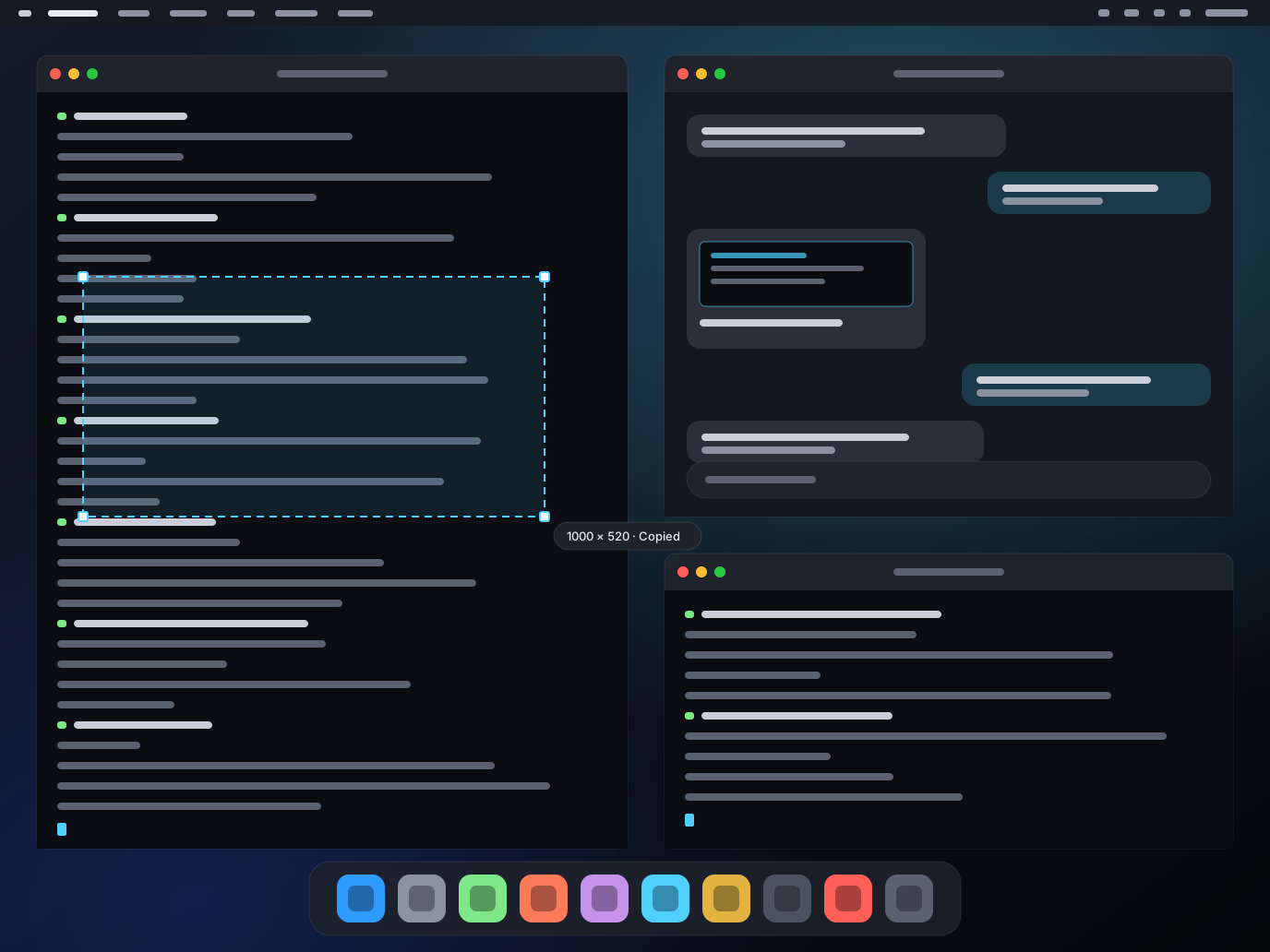
- Screenshot to the Mac's clipboard. Drag a rectangle on the glass and it lands on your Mac's clipboard, ready to paste into Claude, Cursor or ChatGPT. Double-tap for a quick snapshot of an area.
- Instant resume. Switch to another iPad app and back, and you are reconnected without a reconnect dance. Wi-Fi blips are absorbed, not surfaced.
Away from home
No relay. Your network, or your tailnet.
Mimac has no servers. On your local network the iPad talks to the Mac directly. Away from home, it rides your Tailscale network, end-to-end encrypted, with nothing of ours in the middle.
- Tailscale on both devices is required for off-network use. Its free personal plan is enough. Install it on the Mac and the iPad, sign in to the same tailnet, and enter your Mac's Tailscale name in Mimac.
- Encrypted on every path. Pairing is a one-time six-digit code shown on the Mac. Keys stay in the Keychain on both devices.
- Frame rate on the road depends on your connection. Mimac adapts bitrate and recovers lost packets, but 120 fps is a local-network figure. We say so.
How it compares
Modern, one-time, iPad-Pro-native. Nobody else sells that.
The incumbent has not been updated in years. The modern challenger is a subscription. Here is the honest table. Click a row to keep it highlighted.
| Feature | Mimac | Workbench | Jump Desktop | Screens 5 | Splashtop | Luna Display |
|---|---|---|---|---|---|---|
| Native-resolution rendering | Yes, your iPad's exact resolution | Not stated | 1080p virtual display | Mirrors the Mac's display | Mirrors the Mac's display | Not stated |
| Frame rate | 120 fps on LAN | Not stated | 60 fps (Fluid) | VNC | Not stated | Not stated |
| Real macOS pinch and momentum | Yes, native magnify events | Zoom and pan | Basic; pinch is not native magnify | Basic | Basic | Direct touch on a display |
| No on-screen chrome | Yes, controls in the iPadOS menu bar | Not verified | Not verified | Not verified | Not verified | Not verified |
| Lossless audio | Yes, 48 kHz PCM | Audio, codec not stated | 64 kbps compressed | No audio | Audio, codec not stated | n/a |
| Mic passthrough for dictation apps | Yes, Mimac Microphone | Built-in speech-to-text | — | — | — | — |
| Screenshot to Mac clipboard | Yes, drag or double-tap | — | — | — | — | — |
| Headless Mac, no monitor | Yes, and can start before login | Yes | Own 1080p virtual display | Needs a display or dummy plug | No | Yes (Headless Mode) |
| Account or vendor relay | None. Direct on LAN; your Tailscale for remote | Vendor relay, 11 regions | Vendor relay; Gmail-based setup | Screens Connect relay | Vendor relay | Same network |
| Pricing model | $49.99 once, free trial | $14.99/mo or $79.99/yr | $14.99 once | $29.99/yr or $179.99 lifetime | Free on LAN; $23.99/yr remote | $89.99 hardware, once |
| Last iPad app update | New for 2026 | Aug 19, 2026 | Oct 30, 2023 | Jul 30, 2026 | Jul 21, 2026 | Jun 9, 2026 |
Prices and facts as of September 1, 2026, from each vendor's App Store listing and website. "Not stated" means the vendor does not publish it; "not verified" means we have not checked it ourselves; "—" means not offered as far as we can tell. Mimac's 120 fps figure is on a local network. Full comparisons: Workbench, Jump Desktop, Screens 5, Splashtop, Luna Display.
Pricing
Free to try. $49.99 once.
Less than one year of the subscription alternative. Every future update included.
$49.99
One purchase, forever. No subscription, no account.
Launch price: $39.99 for the first 30 days- Free download, full-feature trial. Seven days unlimited after your first connection, then sessions are capped at ten minutes until you unlock.
- Family Sharing. One purchase covers everyone in your family group.
- Mimac Connect for Mac is free. Install it on as many Macs as you like.
- Refunds through Apple. Purchases and receipts are handled by the App Store.
Details on the pricing page.
Questions
The honest FAQ.
What do I need to run Mimac?
An iPad with an M-series chip (iPad Pro recommended) running iPadOS 26 or later, a trackpad and keyboard such as the Magic Keyboard, and a Mac with Apple silicon running macOS 15 or later with the free Mimac Connect app installed. Intel Macs are not supported.
Does Mimac work away from home?
Yes. Mimac has no relay servers of its own. On your local network it connects directly. Away from home, install Tailscale on both devices, sign in to the same tailnet, and connect to your Mac's Tailscale name. Tailscale's free personal plan is enough. Step-by-step guide.
Can Mimac start before I log in to the Mac?
Yes, if you install the optional "Start before login" component of Mimac Connect. It needs FileVault turned off, or a Mac that reaches the login window unattended. A FileVault-protected Mac stops at the pre-boot unlock screen, which no remote desktop app can reach.
Does Mimac work with Intel Macs?
No. Mimac Connect requires a Mac with Apple silicon (M1 or later) because it relies on the low-latency HEVC encoder in those chips.
Is there an iPhone or Vision Pro app?
Not at launch. Mimac is built for iPad Pro with a trackpad and keyboard. iPhone and Vision Pro are not supported yet.
Does Mimac support multiple monitors?
Not yet. Mimac creates one virtual display that matches your iPad exactly.
How do refunds work?
Purchases are handled by Apple. Request a refund through Apple's Report a Problem page. Try Mimac free first; the trial is the full app.
What does Mimac collect?
Nothing. There are no accounts, no servers and no analytics. Video, audio, clipboard and input travel only between your own devices, end-to-end encrypted. Read the privacy policy.